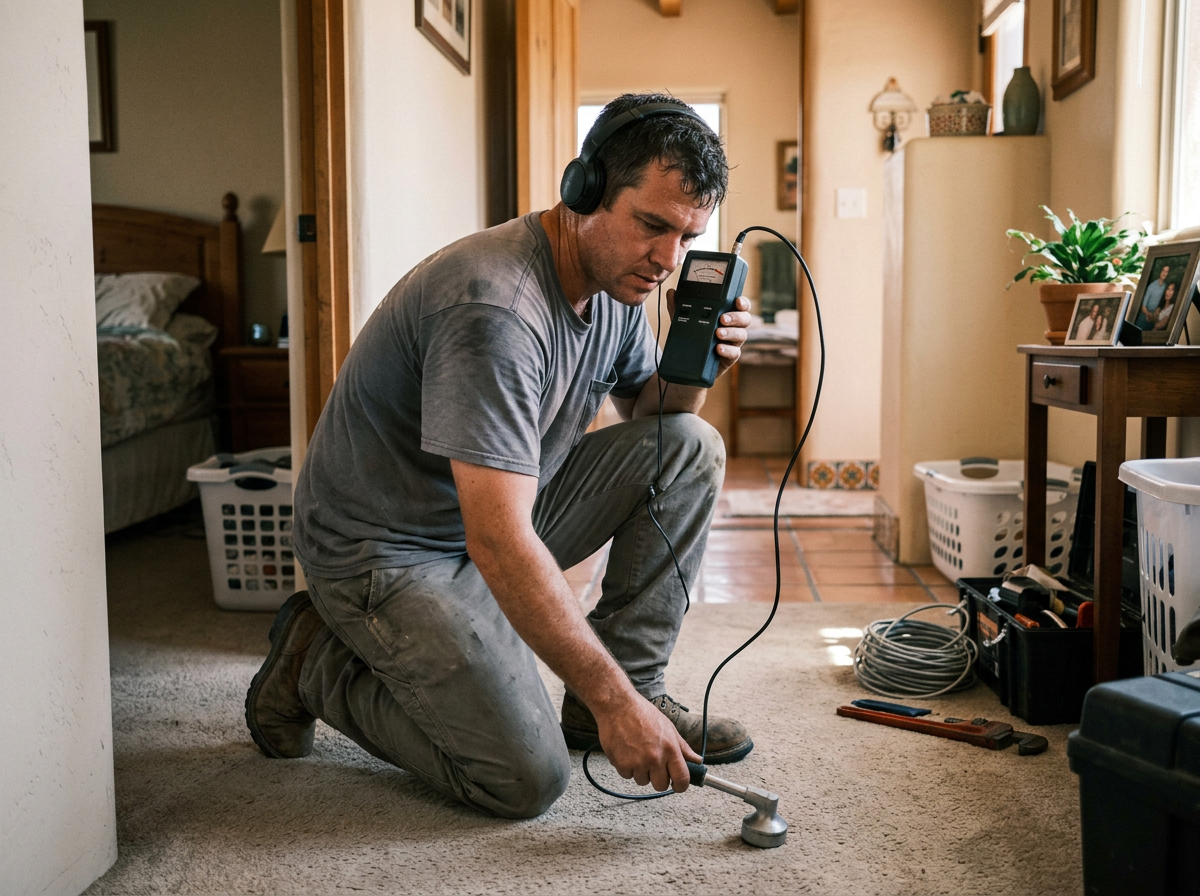
Tucson homes sit on slab-on-grade foundations with copper supply lines embedded in or beneath the concrete, where high calcium and magnesium in the municipal water corrodes pipes from the inside out. Electronic leak detection sends a traceable signal through the line while acoustic sensors listen for the distinct sound of water escaping under pressure, allowing technicians to mark the leak location within inches without random demolition. These non-invasive tools work especially well in midtown and Casas Adobes tracts where original 1960s copper remains common.
Technicians first isolate the suspected branch by shutting off valves or using line plugs, then introduce a calibrated pressure test to confirm the leak exists and measure its severity. Once located, the decision between rerouting through the attic or walls versus breaking the slab weighs caliche hardpan excavation costs against long-term reliability; overhead PEX reroutes avoid disturbing the slab entirely and prevent future pinholes because PEX resists the same internal corrosion that destroys copper.
A typical repair sequence begins with precise location, followed by minimal access cuts or attic routing, installation of new PEX lines tied into existing fixtures, pressure verification, and restoration of flooring or drywall. When a home has already produced multiple pinhole leaks in different rooms, the remaining original copper runs are considered at the end of their service life and a whole-house repipe becomes the economical choice rather than repeated spot fixes.
Repeat leaks in the same home almost always signal systemic copper degradation rather than isolated workmanship issues, particularly in 1950s-1970s neighborhoods like Drexel Heights and Flowing Wells. Early detection prevents secondary damage such as warped subfloors, mold under tile, or sudden spikes in water bills that Tucson homeowners commonly notice first.
Technician insight
In Tucson the thing that catches most people out with Slab Leak Detection is how quickly hard water turns even 1970s copper into Swiss cheese from the inside, so a single warm spot in a Flowing Wells slab usually means the rest of that run is ready to fail next.
Midtown Copper Pinhole
Homeowner noticed a sudden water bill jump and a warm tile area near the laundry. Electronic tracing located a pinhole in the original 1962 copper line under the slab. We isolated the branch, confirmed no other active leaks, and rerouted a new PEX line through the attic to avoid further excavation in caliche soil.
Slab Leak Detection Services We Offer
✓Electronic Leak Location
Uses signal transmitters and receivers to trace leaks in buried copper lines without breaking concrete.
✓Acoustic Leak Detection
Sensitive listening devices pinpoint the sound of escaping water under pressure in slab plumbing.
✓Pressure Testing and Isolation
Isolates individual lines and performs controlled pressure tests to confirm leak presence and severity.
✓Slab Leak Mapping
Creates a diagram of leak locations relative to fixtures to guide minimal-access repairs.
✓Reroute Feasibility Assessment
Evaluates attic or wall routing options versus slab excavation based on home layout and soil conditions.
✓Post-Detection Pressure Verification
Confirms new PEX lines hold pressure after installation before restoring finished surfaces.
Slab Leak Detection Cost in Tucson, AZ
| Service | Typical Range | What Affects It |
|---|---|---|
| Initial Detection Visit | $150–$350 | Includes electronic and acoustic scanning; higher in larger or multi-story homes. |
| Pressure Testing Add-On | $100–$250 | Per isolated branch when multiple lines require separate confirmation. |
| Spot Slab Leak Repair | $2,000–$4,500 | Varies with depth of line and surface restoration needed. |
| Whole-House PEX Reroute | $4,500–$8,000 | Typical three-bed home; attic routing keeps costs lower than slab work. |
| Copper Repipe Option | $8,000–$15,000 | Higher material cost; rarely chosen over PEX in hard-water areas. |
Ranges are typical for Tucson, AZ and confirmed with an exact written quote before any work starts.
How it works
- 1
Initial Consultation
Discuss symptoms such as warm floors, unexplained water bill increases, or musty odors and schedule a same-day visit.
- 2
Line Isolation And Testing
Shut off branches and apply pressure tests to confirm the leak and determine which section is affected.
- 3
Electronic And Acoustic Location
Deploy signal tracing and listening equipment to mark the exact leak point on the slab.
- 4
Repair Recommendation
Present reroute versus spot repair options with clear cost ranges based on access difficulty.
- 5
Verification And Restoration
Pressure test new lines, document results, and coordinate surface repairs with minimal disruption.
Pricing
Detection visits are charged separately from any repair work; full repipes carry wider ranges depending on home size and access.