2026-09-03 · Javier Soto
Warm Spots and a High Water Bill: Reading the Signs of a Slab Leak
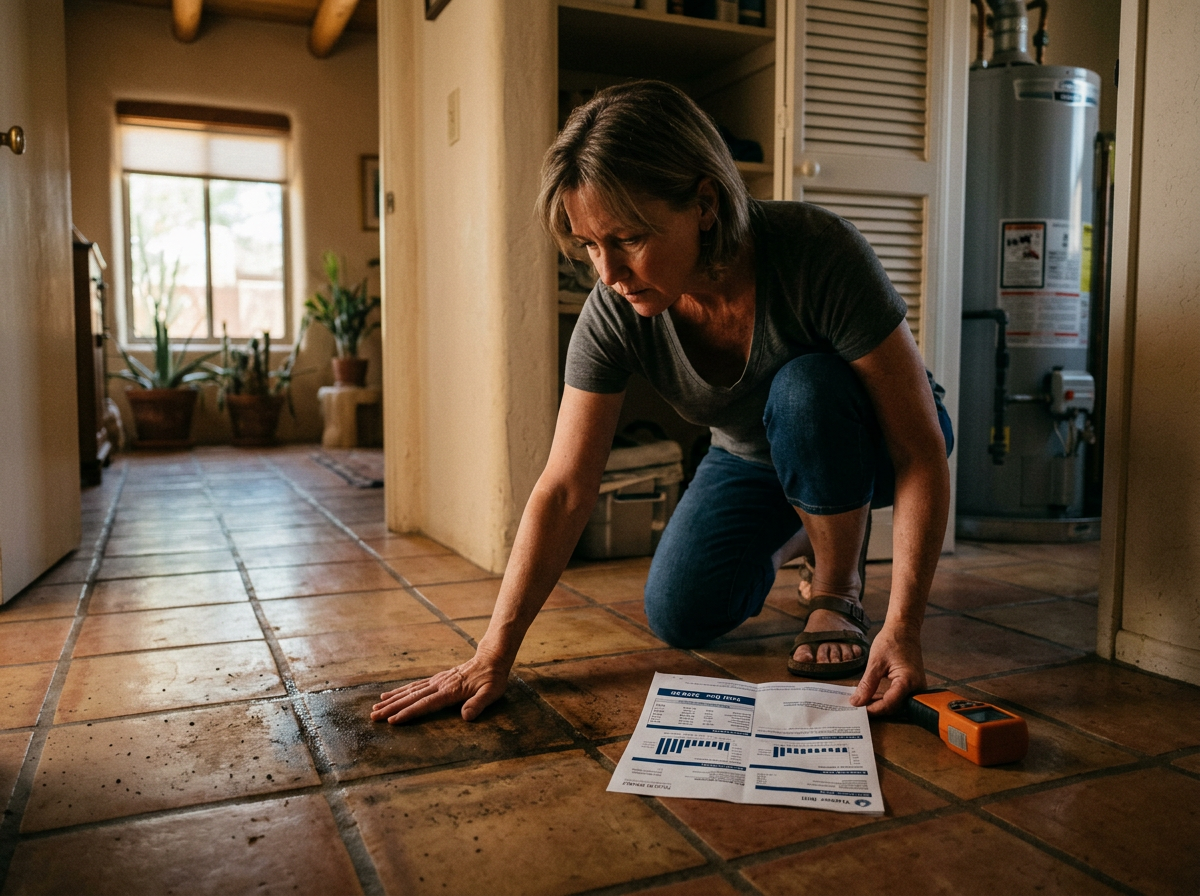
A warm spot on a slab-on-grade floor combined with a water bill that jumps 30-50 gallons per day typically points to a pinhole leak in copper supply lines buried under the concrete. In Tucson the water carries high levels of calcium and magnesium that eat copper from the inside out, often after 15-25 years of service, and the leak stays hidden until heat or flow becomes noticeable.
Recognizing Warm Spots on Slab Floors
Tucson homes built on slab foundations have no basements, so any leak stays trapped beneath the concrete and transfers heat to the surface. Homeowners often feel the warmth first near bathrooms or kitchens where copper hot-water lines run closest to the finished floor. The spot may measure only a few square feet yet indicate a steady 1-2 gallon-per-hour loss that adds up on the monthly bill. Because caliche hardpan lies just inches below the slab, excavation is slow and dusty, which is why many plumbers now favor overhead reroutes through attics rather than breaking concrete. Checking the floor temperature with an infrared thermometer on a cool morning can confirm the anomaly before calling for detection equipment.
Tracking Unexplained Water-Bill Increases
A sudden rise of $40-$80 on the monthly bill with no change in household habits is another reliable indicator. Tucson Water bills list daily usage in gallons, so comparing the last three statements often reveals a steady climb from 150 gallons per day to 250 or more. When the meter continues to spin after all fixtures are shut off, the leak is almost certainly under the slab. Audible running water inside walls or floors, even when no tap is open, adds further confirmation. These three signs together—warm floor, higher usage, and phantom flow—narrow the diagnosis faster than any single symptom.
How Tucson Hard Water Corrodes Copper
Local water chemistry deposits scale while simultaneously thinning copper walls from the inside, creating the classic pinhole leaks that appear after 15-25 years. The corrosion is accelerated in homes built between 1985 and 2005 that still have Type M copper. PEX tubing does not suffer the same internal attack, which is why many reroutes now use PEX instead of new copper. Spot repairs on a single pinhole can cost a few thousand dollars, yet the same chemistry usually produces additional leaks within a year or two, making repeated patches less economical than a targeted reroute.
Weighing Spot Repair Against Overhead Rerouting
When the leak is isolated, slab leak detection and repair can locate the exact pinhole with acoustic or camera tools and repair it through a small access hole. If multiple pinholes already exist or the home is more than 20 years old, under-slab pipe rerouting through the attic often becomes the better long-term choice because it avoids future excavation. The decision hinges on pipe age, number of past leaks, and the layout of the home rather than on any single rule.
Planning for Whole-House Repipe Costs
A full repipe in a typical three-bedroom Tucson house runs $6,000-$14,000 depending on material. PEX installations fall in the $4,500-$8,000 range while copper sits between $8,000 and $15,000. Homeowners who have already experienced two or three pinhole leaks often compare these figures against ongoing spot repairs and choose the repipe route. Details on current pricing appear in the article What a Whole House Repipe Actually Costs in Tucson.