2026-09-03 · Javier Soto
Why Tucson Water Eats Copper Pipe From the Inside
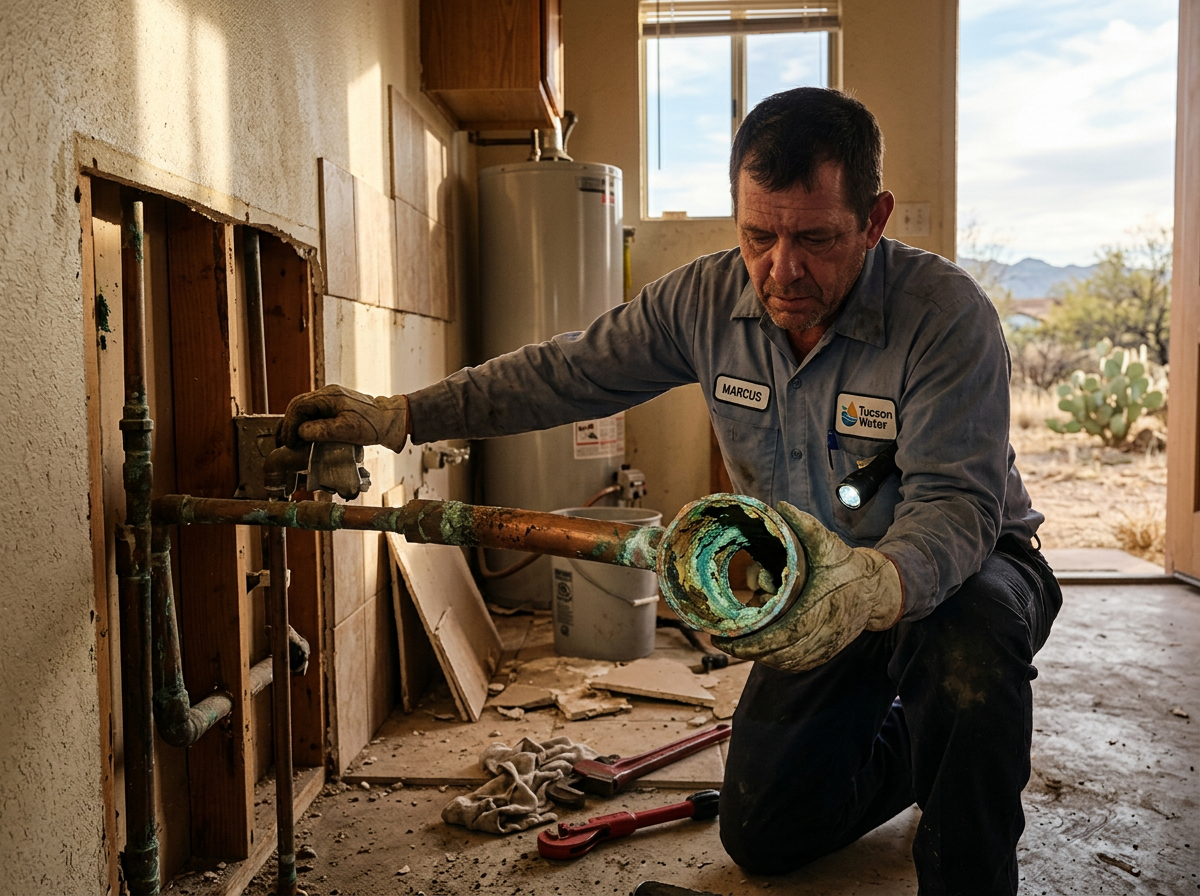
Tucson water high in calcium and magnesium corrodes copper pipe walls from the inside out, thinning the metal until pinholes form and leak beneath the slab.
The Mineral Load in Local Water
Tucson’s groundwater carries elevated levels of calcium and magnesium that remain dissolved until they reach household plumbing. These minerals create conditions where copper gradually loses material from the interior surface rather than from external contact. Over time the pipe wall develops small pits that deepen into actual holes. Because the process starts inside the pipe, leaks often appear first as warm floor patches or unexplained increases in monthly water use measured in hundreds of gallons. Homeowners in Oro Valley and Casas Adobes report the same pattern because the supply chemistry is consistent across the region.
How Internal Corrosion Progresses
The corrosion begins with microscopic surface changes along the copper. Dissolved minerals accelerate oxidation on the inner wall, removing metal at a steady rate that eventually produces a pinhole. In homes built with copper twenty or more years ago, this internal thinning reaches failure point while the exterior of the pipe still looks intact. Slab-on-grade construction keeps the leaks out of sight until water migrates upward or the meter shows sudden volume changes. Caliche layers beneath many Tucson lots further complicate detection because they slow downward drainage and keep moisture near the pipe.
Why PEX Avoids the Same Failure
PEX tubing does not react with the same minerals that attack copper, so it maintains wall thickness even when water hardness stays high. Homes that have undergone whole-house repipe work often switch to PEX precisely to stop repeated pinhole events. The material also flexes during minor ground movement common in the area, reducing stress points that can appear in rigid copper. Cost ranges for a typical three-bedroom Tucson home run $4,500–$8,000 for PEX versus $8,000–$15,000 for new copper, according to local project data.
Reading the First Visible Clues
Warm spots on tile or carpet, the sound of water running when no fixtures are open, and water bills that jump without added usage all point to an active internal leak. These signs usually surface before any exterior staining or drywall damage appears. Spot repairs average a few thousand dollars but leave remaining copper exposed to the same water chemistry. Copper pinhole leak repair addresses the immediate hole while under-slab pipe rerouting can bypass damaged sections without full excavation through caliche.
Weighing Repair Against Full Replacement
When multiple pinholes appear within a short period, owners compare the cost of repeated spot fixes against a whole-house repipe. The linked article What a Whole House Repipe Actually Costs in Tucson outlines current local ranges and material choices. Reroute or Break the Slab? How the Repair Decision Gets Made explains how contractors evaluate access and long-term durability. Either path stops the cycle of internal corrosion once the copper lines are removed from service.
Practical Next Step
Note the exact location of any warm floor area and compare the current water bill against the same month last year. These two observations give a plumber the clearest starting point for locating the leak without unnecessary slab removal.